Evaluate the added information.
- Useful findings beyond the existing CI and review process.
- False or unnecessary warnings and unclassified failures.
- Setup effort, maintenance and repeat-check cost.
Connect change records, executed checks and open review items in an environment agreed for your repositories. Start with observation and reporting, not automatic merging.
A private execution path is separate from a hosted subscription. Repository access, isolation, costs and evidence transfer are agreed before execution.
A discussion can start with 1–3 repositories, 30–100 candidate changes and a 2–4 week evaluation. These are planning ranges, not a promised schedule or an included hosted entitlement.
A log records an execution. A rule classifies available evidence. An AI explanation interprets it. None silently substitutes for the others; an unrun check remains unrun.
Review the current capability boundaries →Tell us the review problem and your execution constraints. Do not send source code or API keys.
Identify repository access, supported commands, isolation and data handling.
Document deliverables, responsibilities, limits and evaluation criteria.
Review case-level evidence and decide whether continued use is worthwhile.
All three plans below are hosted service plans. Start with records, then choose the run allowance and workspace-user capacity you need.
Bring your own key (BYOK) is required on every plan for model execution. Your subscription covers the listed service allowance; your provider bills model usage separately. An AdaptOrch key authenticates the service, not the model provider.
Optional ensemble fan-out calls 2–5 of your own models in a configured run. One admitted run uses one call from your plan quota; your provider bills the tokens for every member. Provider cost depends on the models, tokens and attempts. Workspace users are people, not ensemble model members. Agreement is not an accuracy guarantee.
Model outputs and AI-written explanations are AI-generated and require human review. They are not the same evidence as execution logs or results from checks that actually ran.
Hosted plans do not automatically apply or merge repository changes. Separately configured checks may apply a candidate in an agreed workspace. Human review and the recorded execution boundaries remain explicit.
The monthly allowance counts admitted runs, not status or artifact reads. It is used at admission rather than at SUCCEEDED. Internal attempts remain in that run; a separately admitted rerun counts again. Provider billing is independent.
Repository command checks need a separately configured execution environment. A Pro or Team upgrade does not turn hosted command verification on; setup and execution-environment costs are agreed separately.
CEK is the technical evidence layer used by configured validation paths. Applicability checks, realized diffs, rule findings and replay metadata depend on that path. Research results are not a hosted feature guarantee or general correctness proof.
correctness_claim=false
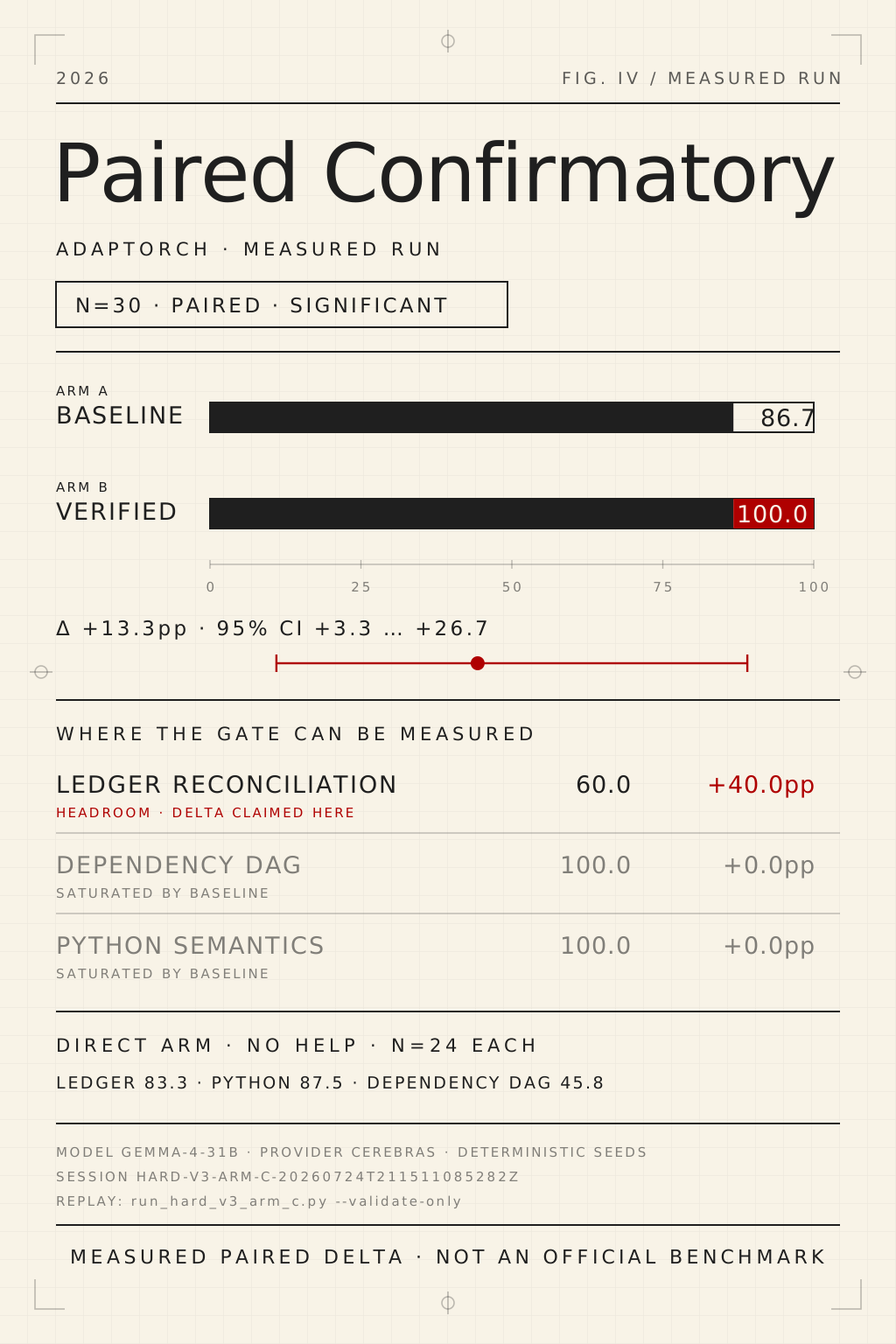
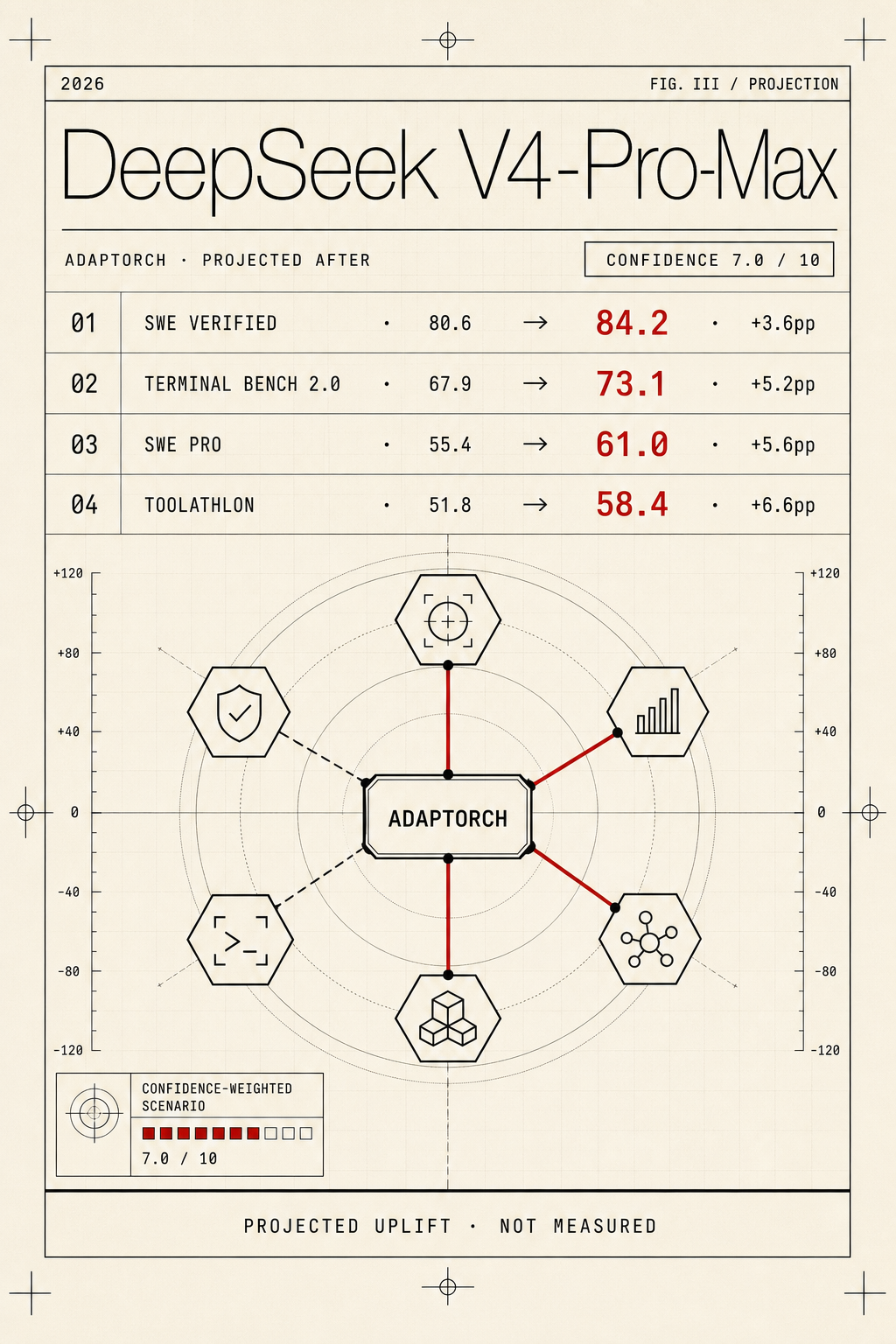
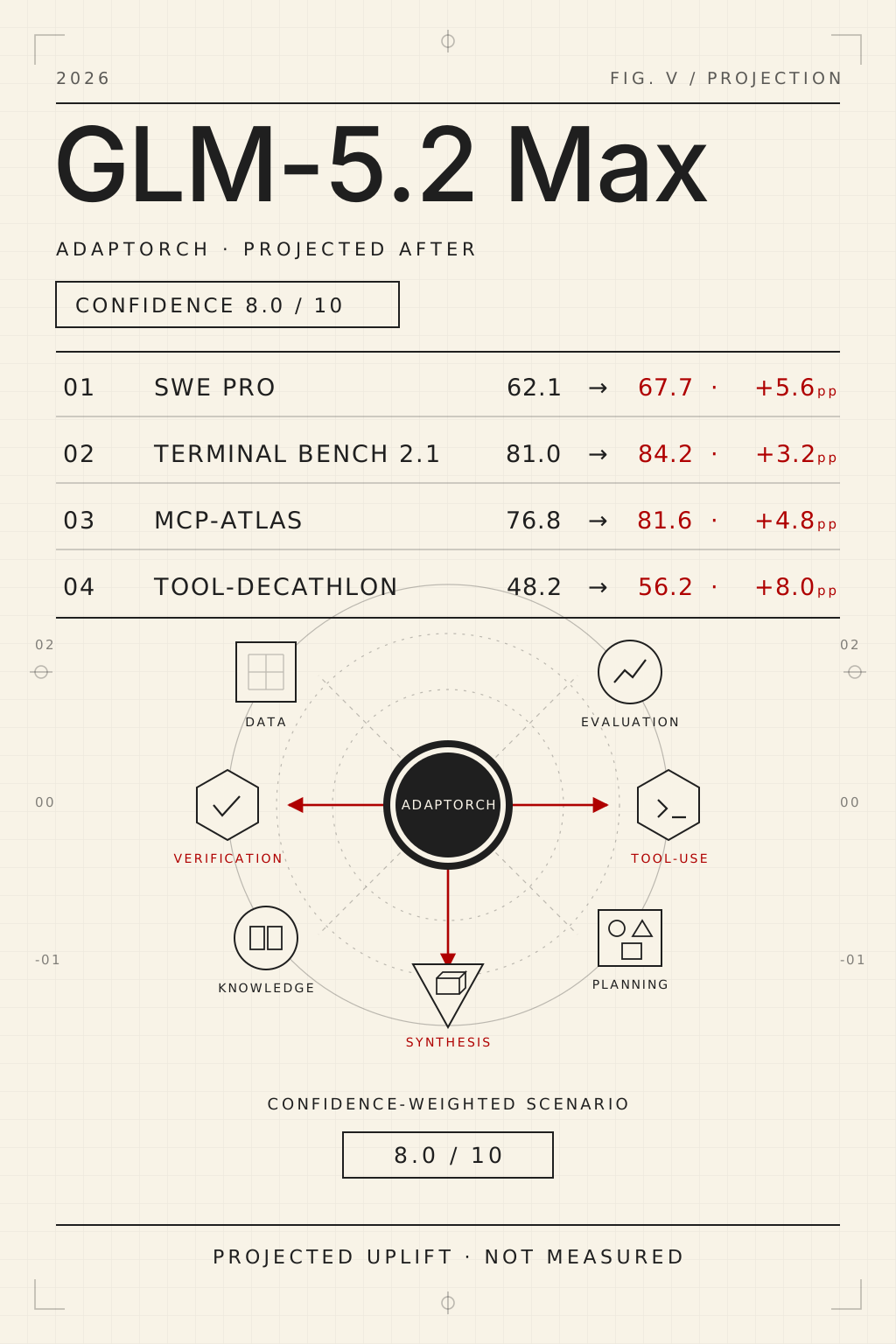
paired_confirmatory_ledger: 30 synthetic ledger tasks, one paired session. Baseline 86.7%, verified 100.0%, difference +13.3pp (95% CI +3.3 to +26.7). The aggregate paired verdict did not reach significance and the family gate did not pass: directional, not proven. This is separate from the A/C ledger comparison. Plates 01–02 are scenario projections, not measured AdaptOrch benchmark results.
Discuss a repository-validation PoC
Start with the problem. We will first establish whether the requested execution path is feasible; scope, cost and timing are agreed separately.
Do not include source code, credentials, customer data or API keys. This form is an enquiry, not an execution request.